.avif)
Leadership training: why is it important for your managers?
“Great leaders find ways to connect with their employees and help them reach their potential.” — Steven J. Stowell
Managers are over-solicited and frequently under stress in the face of the challenges facing the company.
The responsibilities that fall on the shoulders of the manager-leader have never been more important; to succeed, he needs decompression traps that he can find in coaching and sports, for example. The loss of reference and the lack of competence of a manager can lead to a general decline in the quality of life at work with all the resulting harmful consequences.
However, if there are born leaders, others can be leaders in the making. Indeed, just as authority and power do not necessarily go hand in hand, there can be a difference between manager and leadership. In order to develop quality management in the company, it is particularly important to enroll managers in leadership training.
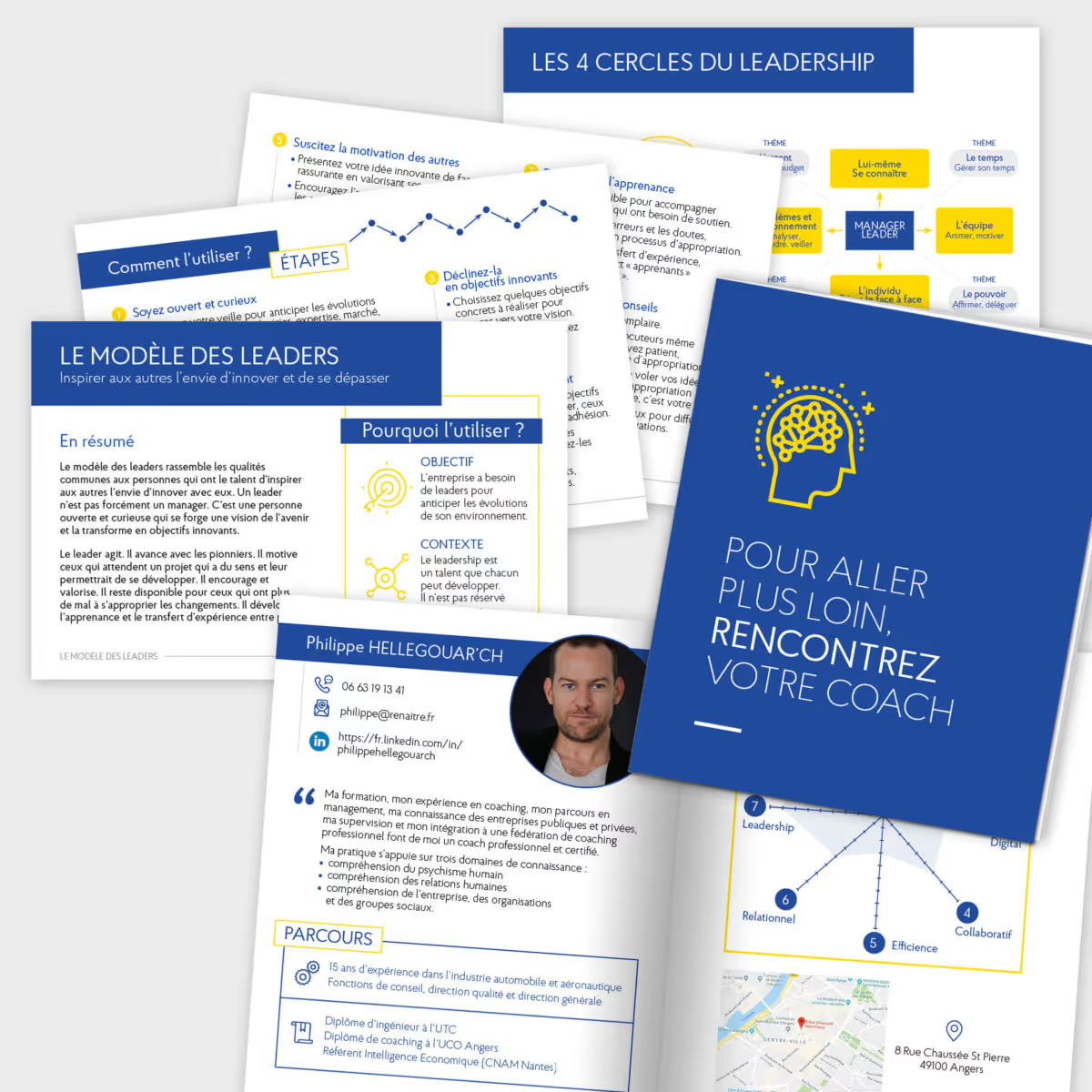
Thus, our Leadership Box is an excellent way to increase your skills on this topic. It is a tool that allows you to get out of your daily life to take a step back. The box contains a set of practical and pragmatic aids and resources to equip yourself as a leader and face the company's managerial challenges.
of the leaders interviewed observed that maintaining values and ethics is the most important quality (makes it possible to create an environment of trust and security favorable to the efficiency, innovation, ambition and commitment of employees) *
.avif)
of them believe that creating the feeling that everyone is succeeding (or failing) together promotes the solidarity, well-being and productivity of collaborators*
.avif)
This is the severe grade that employees give to the leadership qualities of their manager**
.avif)
*Study published in the Harvard Business Review, March 2016
** Study “the leadership revolution”, Valérie Petit and Marieke Delanghe
What path for your managers with our Leadership training?
Managers are part of an educational program that accompanies them in the development of their skills for a period of 12 months.
They thus go through a 3-stage process:
- Receiving the box on their desk: a simple and fun way to discover and appropriate the approach and content offered in the box
- Putting it into practice: he uses the resources in the box to improve his leadership skills
- The follow-up of a coach: he talks with his professional to help him assimilate leadership skills
Develop your leadership : what does our box contain?
The manager begins to self-assess leadership skills to identify strengths and areas for improvement
For each dimension of leadership, managers have practical tools at their disposal to implement alone or with their team
In order to learn how to implement concrete actions, the manager chooses a coach adapted to his needs
I already knew my shortcomings, but being able to choose a coach who was directly competent on them saved me a lot of time!

Clémence S.
Interim manager
More than 1100 organizations trust us, why not you?























Contact us
Our team supports you with tailor-made interventions, adapted to your challenges and your context. Whether it is an audit, a diagnosis, training or targeted support on psychosocial risks, we build a pragmatic, concrete and mobilizing approach alongside you.
👉 Fill out the form to be contacted again or contact us now on 01 73 11 28 27.
%20(1).avif)
FAQS
Do you have questions?
What are the 4 types of leadership?
Authoritarian (or directive) leadership
The leader makes decisions alone and imposes instructions.
This style is useful in crisis situations or when quick results are needed, but it can limit team creativity and commitment.
Participatory (or collaborative) leadership
The leader involves his teams in the decision-making process, promoting exchanges and co-construction.
This style builds motivation, buy-in, and innovation, but it can take longer to implement.
Delegative (or Laissez-Faire) Leadership
The leader gives great autonomy to the members of his team, intervening little in decisions.
This style works well with competent and autonomous collaborators, but it can lead to a lack of coordination if poorly managed.
Transformational leadership
Leaders inspire and motivate their teams by conveying a strong vision and encouraging them to go beyond their limits.
This style promotes commitment, innovation, and performance, but it requires a high level of skill and charisma.
Authoritarian (or directive) leadership
The leader makes decisions alone and imposes instructions.
This style is useful in crisis situations or when quick results are needed, but it can limit team creativity and commitment.
Participatory (or collaborative) leadership
The leader involves his teams in the decision-making process, promoting exchanges and co-construction.
This style builds motivation, buy-in, and innovation, but it can take longer to implement.
Delegative (or Laissez-Faire) Leadership
The leader gives great autonomy to the members of his team, intervening little in decisions.
This style works well with competent and autonomous collaborators, but it can lead to a lack of coordination if poorly managed.
Transformational leadership
Leaders inspire and motivate their teams by conveying a strong vision and encouraging them to go beyond their limits.
This style promotes commitment, innovation, and performance, but it requires a high level of skill and charisma.
For the participant (leader or manager):
Improvement of interpersonal skills: develop listening, empathy and communication.
Ability to motivate and engage: learn to inspire teams and keep them engaged.
Better conflict management: acquire tools to defuse tensions and create a positive work climate.
For the team:
Clarity and consistency: a trained leader sets clear goals and realistic expectations.
Improving well-being: good leadership promotes a respectful and inclusive team culture.
Encouraging autonomy: employees feel supported and encouraged to take initiatives.
For the company:
Improving overall performance: effective leadership generates more productive and committed teams.
Strengthening talent retention: competent leaders create an environment where employees want to stay.
Adapting to change: well-trained leaders better manage organizational transitions and periods of crisis.
For the participant (leader or manager):
Improvement of interpersonal skills: develop listening, empathy and communication.
Ability to motivate and engage: learn to inspire teams and keep them engaged.
Better conflict management: acquire tools to defuse tensions and create a positive work climate.
For the team:
Clarity and consistency: a trained leader sets clear goals and realistic expectations.
Improving well-being: good leadership promotes a respectful and inclusive team culture.
Encouraging autonomy: employees feel supported and encouraged to take initiatives.
For the company:
Improving overall performance: effective leadership generates more productive and committed teams.
Strengthening talent retention: competent leaders create an environment where employees want to stay.
Adapting to change: well-trained leaders better manage organizational transitions and periods of crisis.
What is the difference between leadership and management?
Definition:
Leadership: it is the ability to influence and inspire others to achieve a common goal. A leader focuses on team vision, values, and commitment.
Management: it is the ability to organize, plan, and coordinate resources to achieve specific goals. A manager ensures the implementation of tasks and daily management.
Approach:
Leadership: focused on human relationships and innovation, it seeks to motivate and inspire.
Management: oriented to processes and structure, it focuses on efficiency and compliance with deadlines.
Long term vs. short term vision:
Leader: thinks long term and focuses on strategy and global vision.
Manager: takes care of the short term by ensuring that daily operations run smoothly.
Role in the organization:
Leadership: transforms, inspires, and guides teams into the future.
Management: supervises, controls and optimizes processes to achieve concrete goals.
In summary, a good leader inspires and mobilizes, while a good manager organizes and executes. The two skills are complementary to ensure the success of an organization.
Definition:
Leadership: it is the ability to influence and inspire others to achieve a common goal. A leader focuses on team vision, values, and commitment.
Management: it is the ability to organize, plan, and coordinate resources to achieve specific goals. A manager ensures the implementation of tasks and daily management.
Approach:
Leadership: focused on human relationships and innovation, it seeks to motivate and inspire.
Management: oriented to processes and structure, it focuses on efficiency and compliance with deadlines.
Long term vs. short term vision:
Leader: thinks long term and focuses on strategy and global vision.
Manager: takes care of the short term by ensuring that daily operations run smoothly.
Role in the organization:
Leadership: transforms, inspires, and guides teams into the future.
Management: supervises, controls and optimizes processes to achieve concrete goals.
In summary, a good leader inspires and mobilizes, while a good manager organizes and executes. The two skills are complementary to ensure the success of an organization.





.avif)