[Barometer] Mental Health and QWL - Qualisocial x Ipsos 2026
active people in poor mental health.
.avif)
of workers concerned.
.avif)
of commitment to work for those in difficulty.
.avif)
of employees benefiting from a comprehensive prevention plan believe that this has improved their mental health.
.avif)
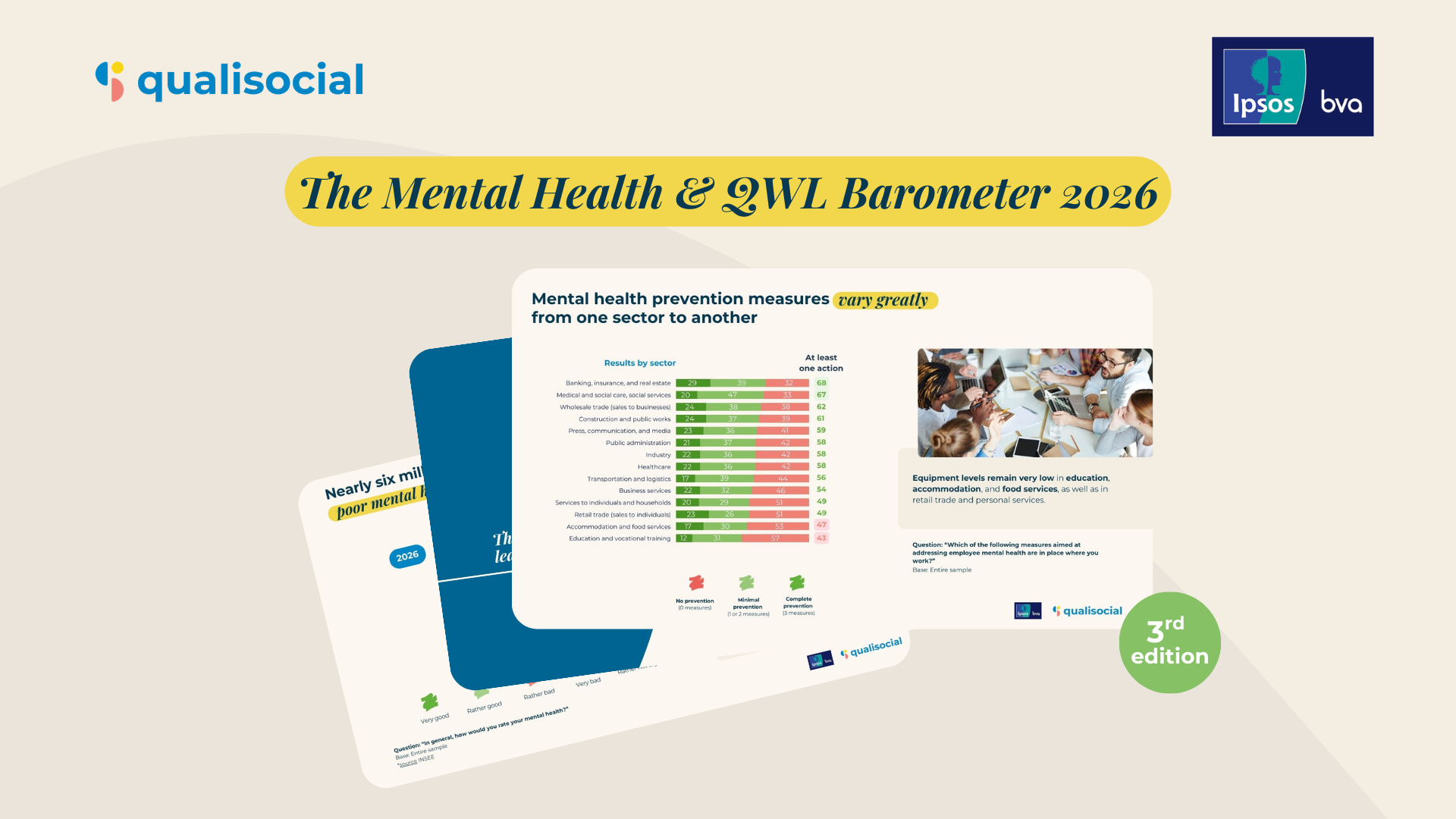
Every year, Qualisocial observes and measures the mental health of French workers. This third edition marks a turning point: for the first time since the health crisis, 22% of active workers are in poor mental health, representing an improvement of 3 points compared to 2025. An encouraging sign, but vulnerabilities remain, particularly depending on the sector and level of risk.
The 2026 barometer will allow you, among other things, to understand:
- The most and least exposed sectors
- The effects of poor mental health on engagement and recommendation
- The main causes of poor mental health
- Employees’ primary expectations regarding quality of work life and conditions (QWLC)
Trends and insights
A trend of progress but persistent disparities
The year 2026 shows signs of overall improvement in workplace mental health, with certain sectors and profiles progressing faster than others. Women show notable gains (+5 points in good mental health), but their mental health remains slightly below that of men (74% of women report good mental health vs 80% of men). Some sectors, such as public administration and hospitality, have experienced significant recovery after very poor conditions in 2024. Conversely, mental health in the industrial sector is declining, and in the healthcare and social sector it remains at a concerning level (31%).
The National Major Cause campaign helped break taboos and open up dialogue on mental health (56% of workers impacted, 71% felt an effect on taboos, 61% on speaking out), reinforcing the effectiveness of preventive measures.
The causes of poor mental health remain mostly linked to non-work-related factors (38%), but work (21%) and the national context (32%) continue to influence the situation. People with low self-esteem and emotional imbalance face an increased risk (+30%), highlighting the importance of targeted interventions.
This edition confirms the importance of a comprehensive and targeted approach, combining prevention, psychological support, and organizational measures, to sustainably support all employees.
{{testimonial}}
“For the first time since the health crisis, mental health is improving: 22% of active workers are now in poor mental health, three points lower than in 2025. These results are encouraging, but they should not obscure the fact that certain professions and profiles remain vulnerable. The role of organizations is crucial: strengthening prevention, breaking taboos, and providing concrete support to employees helps maintain this positive trend. Our goal at Qualisocial is clear: observe, analyze, and share data to help organizations build truly supportive work environments where everyone can perform at their best.”

Camy Puech

.png)

%20(1).avif)





.avif)