Formation Résilience : développer la résilience de vos managers pour prévenir les RPS en période de crise

%20(1).avif)
Why train your managers to resilience in a crisis context?
” I don't measure a man's success by the height of his ascent but by the height at which he bounces when he hits rock bottom. ” George Smith Patton
Developing your ability to bounce back, mobilizing your resources and those of your team, learning to welcome the unexpected and be in action, are skills that managers must develop in order to maintain the physical and mental health of their teammates and maintain the level of commitment and motivation within their teams.
Follow a training to develop resilience It is also about succeeding in maintaining the level of commitment and motivation within your team.
”Resilience means resuming development after psychological agony.” Boris Cyrulnik
74% of employees believe that their well-being has been negatively impacted by changes*
.avif)
The quality of sleep improves by 86% by working on its resilience **
.avif)
The ability to concentrate improves by 43% by working on its resilience **
.avif)
all of your employees and managers are aware of the theme of resilience
your directors, managers and employees integrate the key concepts and have a common language base on resilience
debates, practice analyses, videos... directly operational within daily activity
Highlighting professional experiences to alternate between theoretical contributions and practical cases
Resilience training program for Prevent RPS
%20(1).avif)
Morning
Objectives
- Understand the concept of resilience and its impact on physical and mental health at work.
- Know the tools to develop your individual resilience and that of your employees.
Contents
- Presentation of the speaker and the group and presentation of the objectives and the course of the day.
- Resilience: what are we talking about?
- Key figures, context
- Definition of individual and collective resilience
- Develop your individual resilience and that of your employees:
- Toolbox for evaluating and strengthening rebound abilities: physical and moral state assessment grid/4 axes of resilience/cardiac coherence...
- How to establish a culture of “self-care” within your team?
Afternoon
Objectives
- Understand the strategies and the means available to re-mobilize your teams.
- Appropriate the tools to develop collective resilience
Contents
- How to create a resilient work organization?
- Remobilizing your teams after the crisis: resilience as a manager's tool
- Toolkit for diagnosing the crisis situation in your organization and for developing an effective action strategy
- Adopting collective resilience as a new management method
- Questioning tools and actions for daily implementation
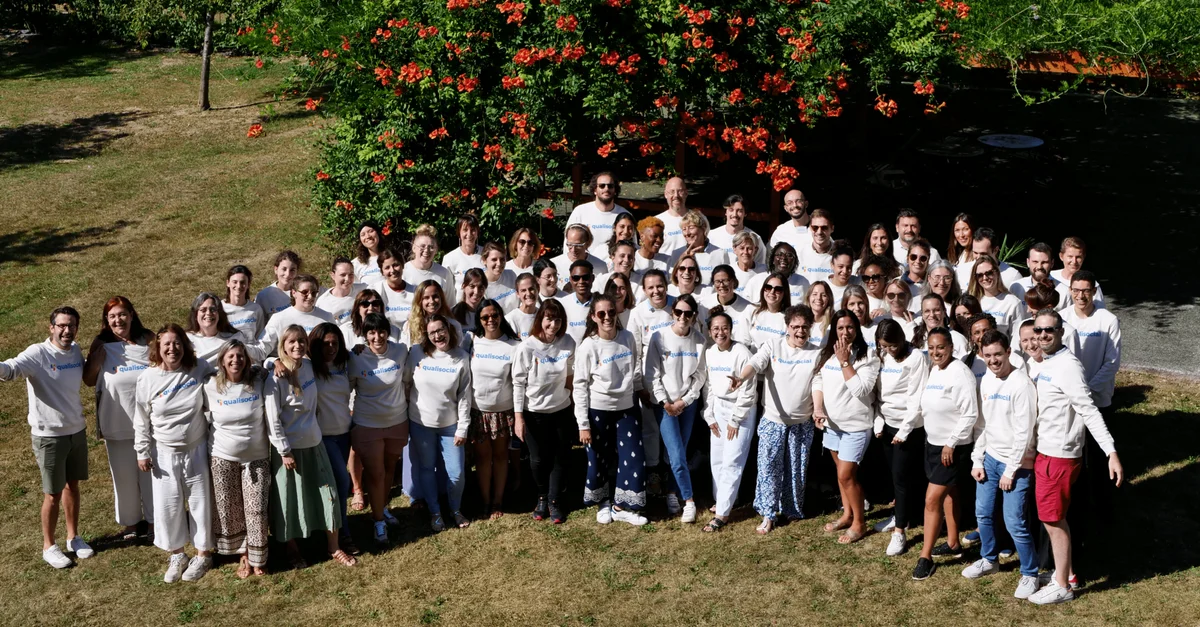
Why use Qualisocial to follow a resilience training?
- Our trainers, coaches, occupational psychologists, specialists in the theme of resilience and RPS, have at least 5 years of experience, with solid references that guarantee the success of each of the sessions.
- Our agility allows us to adapt our educational engineering according to the specific needs of your organization
- A satisfaction rate of over 90% from interns and sponsors
The opinion of The expert
“I did not know the resilience process, thanks to the training I understood its importance. To share and develop with my team! ”

Nathalie S.
Operations manager
More than 1100 organizations trust us, why not you?























Contact us
Our team supports you with tailor-made interventions, adapted to your challenges and your context. Whether it is an audit, a diagnosis, training or targeted support on psychosocial risks, we build a pragmatic, concrete and mobilizing approach alongside you.
👉 Fill out the form to be contacted again or contact us now on 01 73 11 28 27.
%20(1).avif)
The benefits of a resilience training for businesses
Investing in resilience training for your managers is much more than a simple preventive approach. It is a strategic lever to ensure the sustainability of the company in a context of crisis or change. Here are the main benefits:
Strengthening coping capacity in the face of crises
Resilience training helps managers to better manage the unexpected and to bounce back quickly after a difficult situation. This ability to adapt helps maintain business continuity, even during turbulent times.
Psychosocial Risk Prevention (RPS)
Crises can be a source of significant stress for teams. Managers trained in resilience are better equipped to prevent PSR, detect warning signs and protect the mental health of employees.
Improving collective performance
Resilience is not limited to individual ability. It also promotes the creation of a positive group dynamic. A resilient team is more committed, motivated, and able to collaborate effectively, even under pressure.
Talent Retention
Companies that invest in the well-being and resilience of their managers demonstrate their commitment to their employees. This improves job satisfaction and reinforces talent loyalty, thus reducing turnover.
Strengthening the employer brand
By training your managers in resilience, you are affirming your commitment to a healthy and dynamic work environment. This reinforces the image of your company as a responsible and attractive employer, which can make a difference in recruiting the best profiles.
Development of key competencies
Managers trained in resilience acquire essential transversal skills, such as stress management, empathy, crisis communication, and rapid decision making. These skills are invaluable in meeting the challenges of daily professional life.
Reducing crisis-related costs
Poorly managed crises often lead to significant costs, whether it's absenteeism, reduced productivity, or litigation. Resilience training makes it possible to anticipate and limit these impacts, thus contributing to the profitability of the company.
By integrating resilience into the heart of your management strategy, you prepare your teams to better face the challenges of today and tomorrow. It is an investment that benefits all levels of the organization.





.avif)