LGBTQIA+ and mental health at work: creating an environment where everyone can breathe
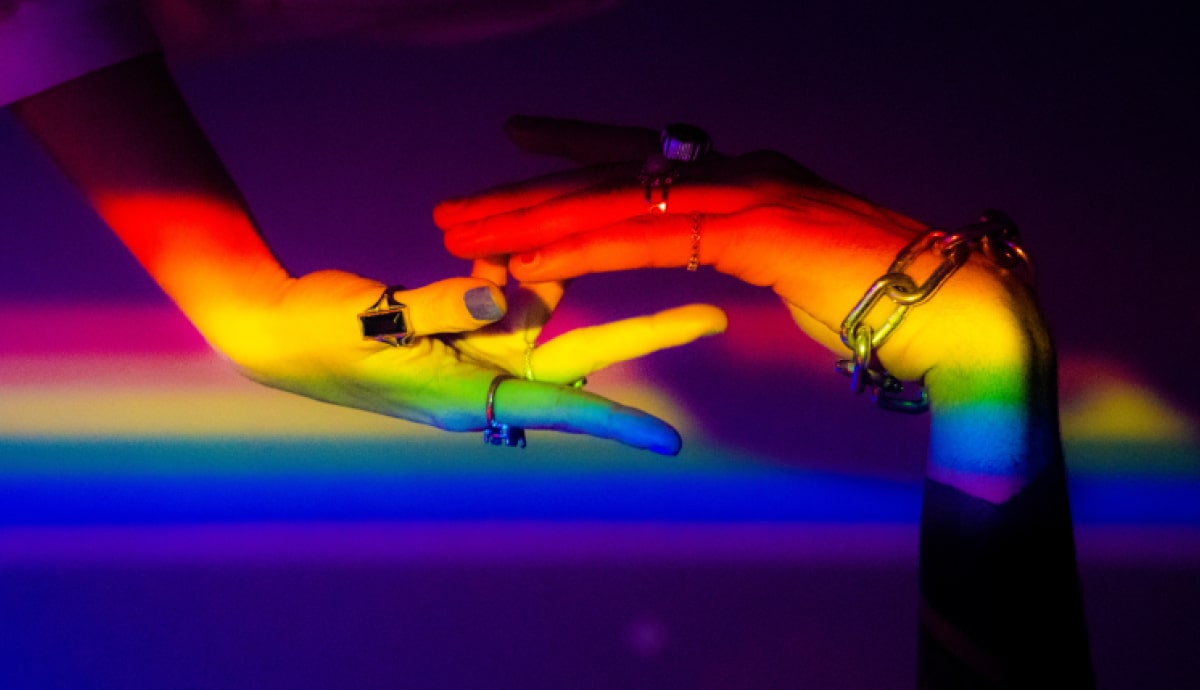
In June, and all year round, how HR can move from intention to action
We talk about it a lot in June... and sometimes we miss the point. The inclusion of LGBTQIA+ people at work is not (just) a question of flags or internal communication. It is a question of sanity, work climate, psychological safety.
Flexibility sought with hybrid work, but benchmarks changed
Long dreamed of, freedom is finally becoming a reality for millions of employees. No more hours of transport, hello coffee breaks in the kitchen and meetings in socks. Hybrid work is a bit of the best of both worlds. And it's not just an impression: 82% of employees believe that this organization improves their work/life balance, according to an OpinionWay study from 2024.More autonomy, more concentration, a personalized rhythm... The list of benefits is long. Except that in the background, other less visible effects set in.
Flexibility that blurs the boundaries
When we no longer clearly distinguish the workspace from the living space, all our organizational automations falter. The breaks are getting blurry. The hours are getting longer. The brain has fewer points of reference for going into “off” mode.As a result: some find themselves replying to an email at 22:00 “just to get rid of it”... and feeling guilty for not being connected early enough in the morning.According to the study conducted by the human resources consulting company, Mercer, 55% of remote workers have trouble setting boundaries between professional and personal life.
🧠 Definition: The acronym LGBTQIA+ Refers to people Lesbian, Gay, Bisexual, Transgender, Transgender, Queer, Queer, Intersex, Asexual and anyone who does not identify with dominant gender and sexual norms. Behind these letters, there are people who, at work, can still all too often feel invisible, judged or insecure.
And above all: it is an ultra-concrete HR lever. Because when you take action, the impact is direct on engagement, retention and trust.
”For me, the most concrete, and yet often underestimated, lever for improving the mental health of LGBT+ people at work, it's the presence of visible model roles. It is essential. Commitments must also be formalized with a inclusion charter, and above all make these commitments visible: for example, by clearly displaying them on the Career site. We know that nearly 80% of candidates inquire before an interview: it is therefore a key point of contact to show commitment to this community. It is important that these role models can be expressed, especially on platforms like LinkedIn. This helps to break taboos, to normalize courses, and to create a reassuring environment for all.. ”, Maud Grenier, CEO & Trainer (ex-HRD), LinkedIn™ Top Voice 🌈
In this article, we take stock: figures, concrete challenges for HR, and courses of action that are accessible and applicable in all sectors.

Why talk about mental health and LGBTQIA+ at work?
Because the numbers speak for themselves:
- 1 in 4 LGBTQIA+ people feel that their gender orientation or identity has a negative impact on their mental healthSource: YouGov, 2023
- 1 out of 2 has already been discriminated against at workSource: IFOP for L'Autre Cercle, 2022
- And in working-class environments, Fewer than one in two LGBTQIA+ people feel free to be themselves at work (only 42% are “out” in this context, compared to 65% in executive jobs)Source: IFOP for L'Autre Cercle, 2022
And yet, the workplace should be a resource space, not a trigger for stress or isolation. It's not “just about diversity.” It's about daily well-being, healthy working relationships, and a sense of belonging.
Why does it concern all businesses and not just “headquarters”
Often, we think that these are “executive” topics, dealt with between HR teams, in glass towers. But in reality, the need for psychological safety is even more pressing on sites where speech circulates less freely:
- In factories, where taboos are sometimes heavier;
- In workshops, where humor can quickly turn into micro-aggression;
- In warehouses, where the codes are different, but the psychological injuries are very real.
A cloakroom joke, a heavy silence, a repeated remark... Mental health is often undermined by “little things”. And it is often the less “corporate” environments that have the most to gain by creating a climate of trust. No need to display a rainbow on the walls: sometimes all you need is a trusted HR relay, a trained manager, and real listening skills.
Concretely, what is damaging the mental health of LGBTQIA+ people at work?
Talking about inclusion is one thing. Living every day in an environment where you have to hide, shut up, or pretend is another. For many LGBTQIA+ employees, this is a burdensome reality and its effects on mental health are very real.
Invisibilization, double life: the mental burden of silence
Being invisible is not just an abstract concept. It'sAnd having to avoid personal questions to the coffee machine, hide photos, rephrase your weekend, and constantly monitor what you say. And it wears out.
- 1 LGBTQIA+ person out of 2 is still not “out” in their company
- and 60% are not affected by their direct hierarchy (L'Autre Cercle x IFOP, 2022).
This invisibility is rarely chosen for comfort.
- 83% of affected LGBTQIA+ people say they do it to avoid hampering their careers, and nearly two-thirds to maintain their well-being at work.
Microaggressions, inappropriate remarks: the weight of the unsaid
Being LGBTQIA+ at work is often To hear who we are” too ”,” Not enough ”, or” different”. And these microaggressions are piling up.
- In France, 55% of LGBTQIA+ employees have already heard LGBTQIA+ comments at work,
- and 30% say they have been victims of assault in their company : whether verbal, physical or sexual (L'Autre Cercle x IFOP, 2022).
These behaviors, sometimes trivialized, have a direct impact on the sense of security, of reconnaissance and belonging. And therefore, on mental health.
Direct impact on performance and engagement
When you can't be yourself at work, you fall back. We're running out. And often, we pick up.
- According to a British study, LGBTQIA+ people who are not “out” at work are 46% more likely to show signs of anxiety or stress (Stonewall, 2023).
This climate has a cost: for employees, in mental energy; for the company, in commitment, absenteeism or turnover.
A month of pride, and after? 5 concrete actions for HR directors and managers
The good news is that inclusion does not (necessarily) require a large budget. It often starts with a posture, a listening, a detail that changes everything. Pride month is a good starting point, but inclusion does not happen in 30 days, nor only on LinkedIn (you will have understood it, Beware of rainbow-washing!) .For HR directors and managers, especially in multi-site environments, the real challenge is continuity: embody inclusive values, on the ground, with visible and sustainable actions.
“I remember an HR director telling me: “We don't need to be inclusive, diversity is already normal for us.” But it's not that simple. When you have always lived with discrimination, you see the world differently. A person may be afraid to come out not because of what they are going through today, but because of past experiences, sometimes marked by homophobia or transphobia. It is necessary to understand the mechanisms of self-censorship and the way in which violence, even implicit, affects individuals. Exchanging with LGBT+ role models, internally and externally, allows you to open your eyes to the realities experienced on a daily basis. Microaggressions, homophobic jokes, silence: all this affects self-confidence, well-being at work, and ultimately, performance. A simple but powerful initiative: for management to speak out publicly, clearly and solemnly, to affirm that inclusion is a priority. It's a strong statement that sets the tone and engages the entire organization. Obviously, this must be accompanied by concrete actions on a daily basis: a clear action plan, an investigation procedure in case of discrimination, and zero tolerance for differences. In summary, the levers exist. Sometimes it's enough to see, listen, and act consistently to sustainably transform the work climate. ”, Maud Grenier, CEO & Trainer (ex-HRD), LinkedIn™ Top Voice 🌈
1. Creating a safe work environment at all sites
Psychological safety should not stop at head offices or open spaces in Paris.
- Set up a secure internal listening channel, unnamed, accessible to employees of each site (dedicated messaging system, anonymous email address, local contact point of contact).
- Train inclusive referees in the field, in workshops or warehouses, to guarantee trusted relays everywhere.
2. Give visibility without putting yourself at risk
LGBTQIA+ visibility is not based solely on coming out.
- Suggest portraits or interviews of volunteer employees in selected formats: internal podcast, HR newsletter, billboard.
- Display and offer employees signals from allies (badges, email signatures, posters with QR codes to internal resources). Remember that inclusion is a collective matter, not an individual one.
3. Integrating inclusion into HR rituals
Inclusion should not depend on a one-time event. It is cultivated in the details.
- Create neutral HR forms (avoid Madam/Mr by default, suggest “first name used” fields).
- Integrate a “well-being & inclusive climate” point to annual interviews, even in technical or low-skilled jobs.
4. Anchoring commitment in a global policy
- Deploy an inclusion charter clear and translated for each business, accompanied by an implementation guide.
- Suggest awareness-raising workshops to unconscious biases, in priority for local managers, team leaders, managers with delayed schedules or isolated sites.
- Measure the results : social climate, perception of inclusion, job satisfaction, rate of Turnover.
5. Adopt a zero tolerance policy and empower everyone
The fight against discrimination and attacks cannot rely solely on the victims. Each colleague has a critical role to play when they witness or learn about unacceptable behavior.
- Establish a clear policy of zero tolerance in the face of discrimination and attacks.
- Train all employees in the right reactions: listen, support, and report back information quickly.
- Raise awareness about the importance of taking action even if the victim does not dare to speak out for fear of consequences.
- Establish an incident management protocol with immediate and effective sanctions.
- Ensure rigorous follow-up to avoid any recurrence and maintain a respectful work environment.

Conclusion: For a work climate where everyone can breathe
Because it involves a kind eye more often than a big budget, inclusion is within the reach of all businesses, across all sectors.The company has a powerful role to play in mental health of all of its employees, including LGBTQIA+ people. And this role starts with concrete, visible, sustainable actions... on a daily basis.Pride month is not an end in itself. It is a starting point. A moment to listen, to understand, to transform. And to make inclusion a real driver of well-being, cohesion and performance.





%20(1).avif)





.avif)