De-stress at the office with breathing techniques
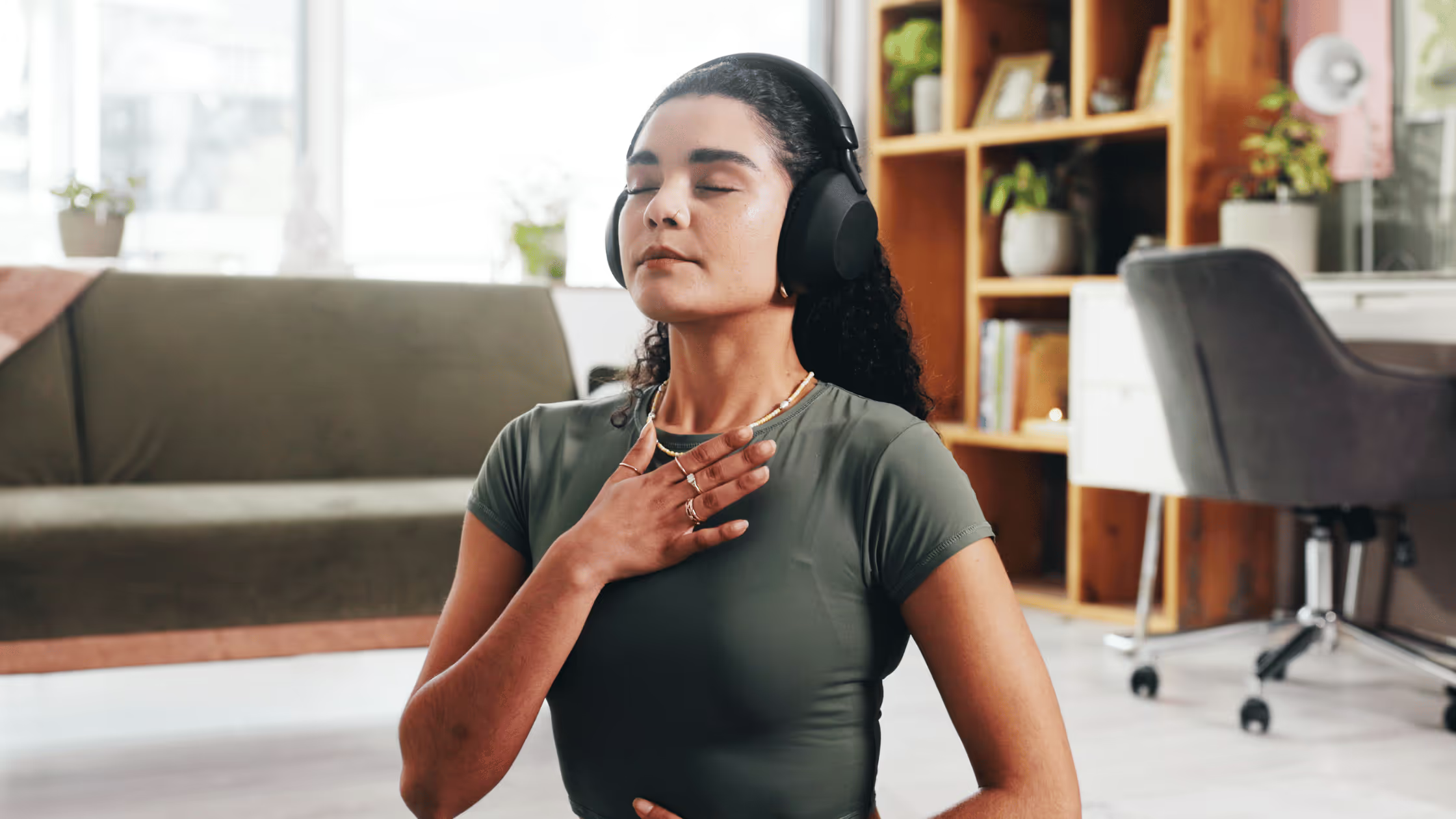
Breathing exercises you can do at work
Managing stress at work is a problem that many employees face. Faced with the accumulation of files to be processed, deadlines that are too short or even pressure from customers or management, the causes of stress are numerous. Among the techniques known to improve stress management, breathing exercises are a great help. In an environment where intellectual effort is required, we no longer take the time to reconnect with the body and our breath. Fortunately, for better stress management at work or simply to feel better, there are various exercises that you can easily do in the office.
Breathing exercises for better stress management at work
Essential for life, essential for living, breathing is an innate reflex. As soon as we arrive in the world, our lungs take over to bring us our first breath of air. Breathing is a vital exchange, and by doing some breathing exercises, you can reduce your stress at work.
Alternate breathing
The idea of alternating breathing is to cleanse your inner energy by alternating inhalations through your nostrils. With this technique, you gain well-being and especially emotional stability. If you are facing a stressful situation in the office, you can put them into practice to refocus on work. Here's what you need to do:
- Squeeze the left nostril (with your thumb) to release only the right one: inhale and exhale.
- Then release the left nostril to use only the right: inhale and exhale.
Repeat the exercise for about one minute, making sure to breathe slowly. Then, inhale and exhale with both nostrils gently without abruptly.
Cardiac coherence
Cardiac coherence is a relaxation technique. The idea is toSoothe the the boiling brain at work. As a result, heart and brain work at almost the same rate. This is in order to regain emotional stability: on the one hand to ease tensions, and on the other hand to reduce anxiety. All of this increases and stimulates intellectual abilities.
To do well, adopt the “3.6.5" method explained by Dr. O'Hare in his best seller entitled “365". In summary, do the breathing exercise three times a day with a 5-minute break to do it. Here's how to do it:
- Sit on your chair with your back straight.
- Breathe deeply and slowly through your belly.
- Inhale for 3 seconds.
- Hold the air in your lungs for 12 seconds.
- Exhale through your mouth for 6 seconds.
During the exhalation phase, push as deeply as possible until you are (almost) out of breath. The inspiration phase will bounce back naturally.
Abdominal breathing
The belly is often underestimated in the continuous process of breathing. In reality, it is certainly the nostrils that allow air to reach the lungs, but the role of the abdomen should not be overlooked either.By adopting abdominal breathing, the Respiratory capacity is amplified. It is thanks to abdominal breathing that opera singers manage to reach difficult notes. It also improves physical performance by facilitating the evacuation of toxins. Hence the revival of good humor for Get rid of stress at work.To breathe with your stomach is quite simple and you can do it at home or in the office. To start, place your hands on your abdomen. You should feel the movements of your belly as you breathe. Then, inhale through your nose while inflating your abdomen (without forcing). Then, exhale slowly as you let your abdomen return to its original, flat state. You can do it for 5 minutes, 3 times a day (at least) to relax in the office or at home.
Chest breathing
It is at the level of the thorax that the whole phenomenon of breathing operates. But this time, chest breathing deserves a real reminder as part of the breathing exercises you can do on your workbench. The advantage of this technique is release emotions by “opening” the chest. If you are tense, go for this method as well. Here's how to do it:
- Position: head, neck and back well aligned, legs flat on the ground, shoulders pulled back.
- Raise your arms forward to chest height.
- Bend your elbows so your arms and forearms form a right angle.
- Breathe in slowly through your nose.
- Spread your arms out as if in a gesture to open the window shutters.
- Hold the air in your lungs for a few seconds and then bring your bent arms back in front of you.
- Exhale through your mouth as if to close your window.
Repeat the exercise at least three times before relaxing your arms.
Benefits of breathing exercises at work
They say that” Breathing is the cradle of rhythm ”. If you relax, or feel that tensions are rising to the surface, do breathing exercises to regain control. Moreover, beyond promote lung development, breathing exercises offer various beneficial mental and physical benefits, especially in the office:
- Managing stress at work: eliminate stressors in your life by taking a deep breath. Indeed, deep breathing contributes to the production of enkephalins and endorphins in your body. Hormones that help with relaxation in stressful situations.
- Reducing anxiety: of course, to treat anxiety, you need to know the source cause. However, breathing exercises can relieve symptoms and regain a balance between the mental and the physical.
- Blood pressure regulation: even if breathing exercises are primarily aimed at relieving stress, you should also know that they can reduce heart rate and blood pressure. By choosing one of the proposed methods, you will be able to Lowering your heart rate and your blood pressure.
- Fall asleep: Indeed, the office is the last place where you go to sleep. However, these breathing techniques offered will also serve you at home. Thanks to their calming and “reassuring” effects ”, they will participate in your relaxation once at home for Start the new day the next day.
One out of four employees in France recognizes that their mental health is deteriorating according to the 2025 Mental Health and QWL barometer published by Qualisocial and Ipsos. Stress is one of the factors that affect mental health, which is why it is important to be concerned about it and to find solutions to learn how to manage it.






%20(1).avif)





.avif)