Sleep and remote work: how do you make it work?
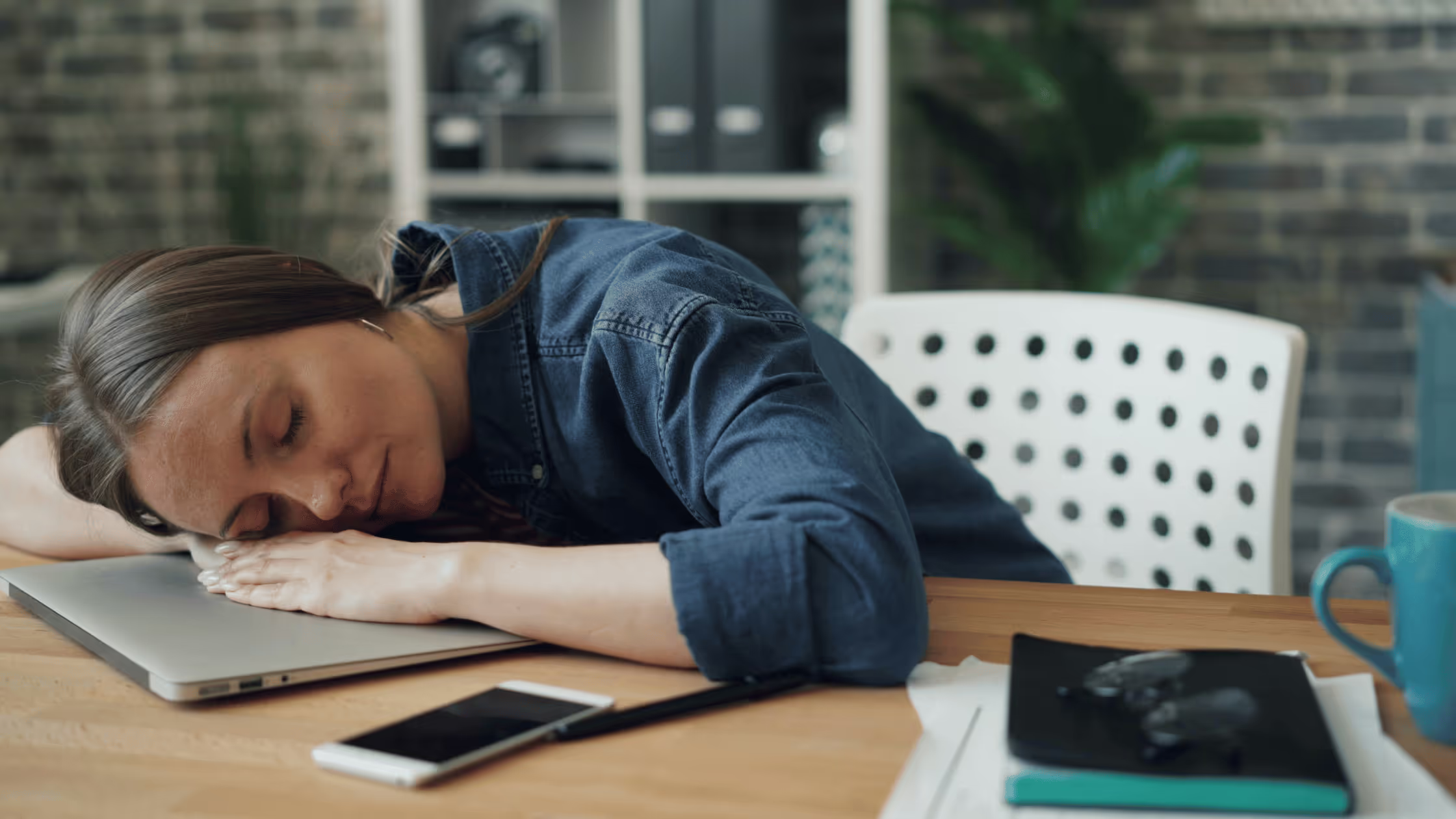
It would be tempting to think that sleep is exclusively a personal matter. However, it has direct consequences not only on performance, but also on our professional behavior. It is therefore a question of becoming aware of this, especially in an anxiety-provoking period, marked by the health crisis and, for many, by a hasty transition to teleworking.
The impact of sleep on productivity: what does the science say?
Sleep and its effects on health and behavior have been the subject of much research as early as the end of the 19th century. This work quickly demonstrated that lack of sleep significantly interfered with concentration and productivity. Another consequence quickly highlighted: the loss of alertness and the increased risk of accidents at work.
In 1999, a study showed that sleep deprivation also affects the prefrontal cortex. However, this region of the brain controls behavior, but also creativity and the ability to make decisions. In other words, workers affected by a lack of sleep may lack “self control” ; they also tend to get stuck in routine tasks, and they are no longer in a position to be innovative or contribute to achieving business goals.
Science has worked to determine the optimal length of sleep. It is commonly referred to as 8 hours of sleep for an adult. This is actually an average that can be adjusted according to age and temperament. The most recent research also highlights the importance of sleep quality. And the verdict is simple: A shorter night of “restful sleep” is better than a long night of disturbed sleep.
Sleep and remote work: what are the main sleep disorders that affect working people?
Over the past 30 years, the INSV (National Institute of Sleep and Vigilance) has observed that sleep time has significantly shortened, especially among active young people. This is due to practical reasons — such as longer commute times to work — as well as to the emergence of new technologies.
The emergence of new technologies has radically changed the way we work. Constantly connected via the internet, then thanks to smartphones and tablets, it is no longer possible to break away from work. Responding to an email at midnight, over the weekend or while on vacation is no longer just routine: it's too often the norm.
We can thus note the increase in sleep disorders among active people. This is particularly the case of dyssomnias, the alteration of the quality or duration of sleep. And no less than 55% of employees admit that they would like to sleep more.
From a scientific point of view, The link between sleep and work performance is no longer in doubt. Stressed employees, potentially more aggressive and struggling to perform their tasks, ultimately contribute toworsening of psychosocial risks within the company.
So it's about The manager to take this into account, first of all by allowing its teams to properly compartmentalize professional and private life. This approach is all the more essential in the context of the health crisis linked to COVID 19, at a time when many employees are facing teleworking for the first time.
Presence of children or, on the contrary, extreme solitude, lack of space, too noisy context: The combination of lockdown and remote work can be stressful and anxiety-provoking.. It is therefore a question of not underestimating the psychosocial risks linked to the health crisis, and to properly measure the impact of this unprecedented situation on the sleep of employees.
While it is advisable not to over-solicit your teams, awareness-raising is required. It is relevant to remind them that the quality of sleep is crucial for their health, by highlighting some essential points to benefit from quality sleep:
- Care for good bedding: mattress, pillow and duvets;
- The importance of maintaining structured and fixed work schedules;
- The benefits of a nap of up to 20 minutes in the afternoon;
- The need to stay away from screens at least 1 hour and a half before bedtime.




%20(1).avif)






.avif)