On the road to change with Kaizen
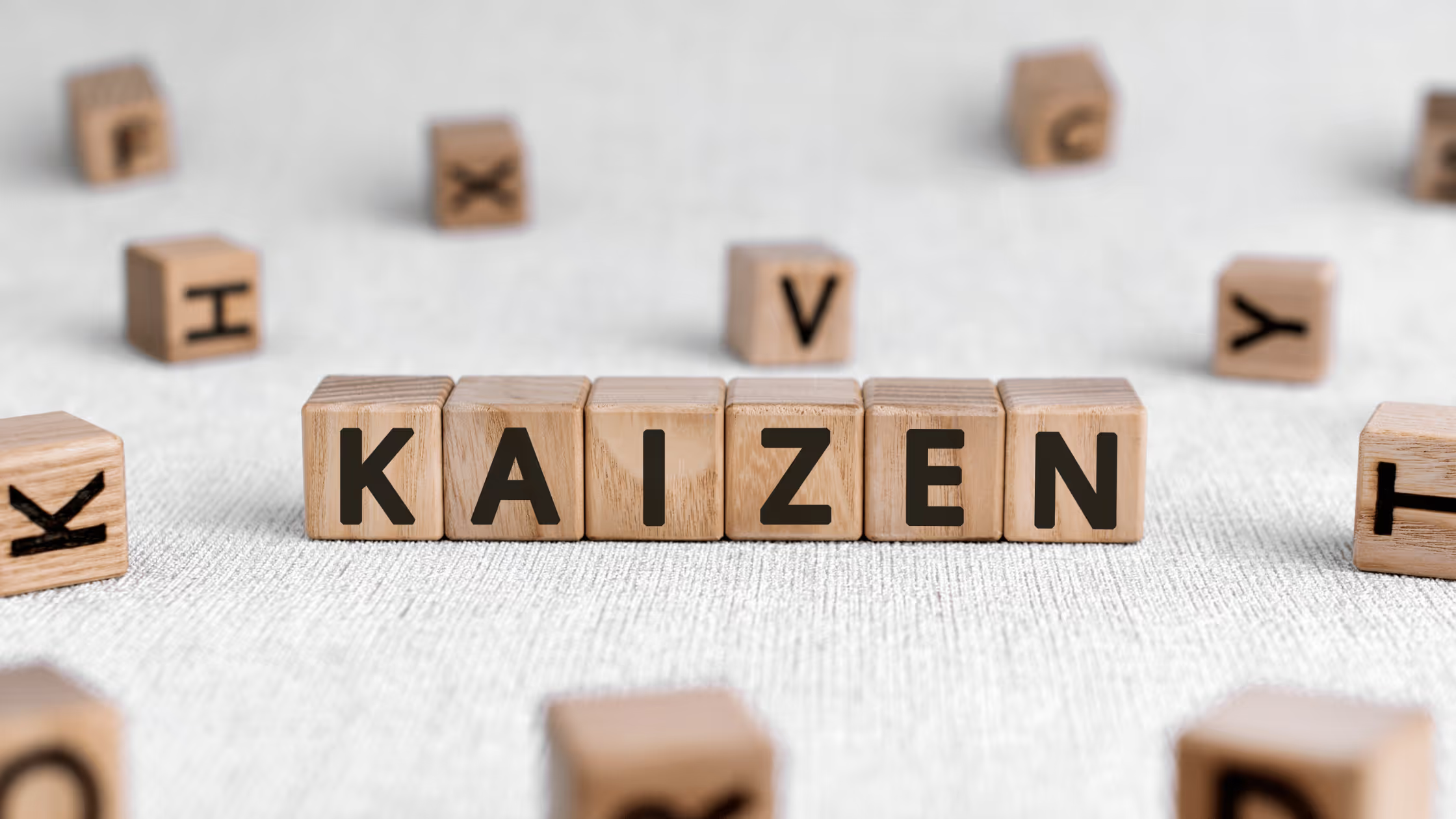
The Kaizen, Japanese contraction of “change” (kai) and “better” (zen), is above all a state of mind. He advocates improvement continuous and progressive, rather than radical transformations. Long reserved for the industrial world, it applies just as well to daily professional life. The idea: to move forward step by step, but every day.
The power of gradual change
Contrary to our culture of immediate results, the method Kaizen Value the small regular improvements. The objective: to integrate new habits sustainably, without rushing.
At work, this philosophy helps to increase efficiency, reduce pressure, and build lasting well-being. As Euripides said: “Change is preparing for another.”
2 Kaizen tools that are easy to apply in the office
To move from intention to action, Kaizen is based on concrete tools. Here are the two most useful on a daily basis:
1. The 5S: tidy up to work better
Objective: to maintain a clear, functional and pleasant working environment.
5S form the basis of Kaizen on a daily basis:
- Seiri (Trier) : eliminate everything that is not useful.
- Seiton (Ranger) : organize what is left and put what is most useful within reach.
- Seiso (Clean) : keep a clean and pleasant environment.
- Seiketsu (Standardize) : maintain these best practices over time.
- Shitsuke (Follow) : anchor these habits to make them a sustainable routine.
The result: less time loss, more concentration... and an office that breathes.
2. The Ishikawa diagram: identifying the causes of a problem
Also called 5M method, this tool helps to understand the origin of a difficulty rather than acting urgently. It is based on five main categories:
- Methods
- Workforce
- Milieu
- Machines
- Subjects
Example: are you often late?
The causes can be multiple: traffic, organization, preparation, equipment... Once the cause is identified, the action becomes simple and targeted.
Kaizen & management: a powerful tool for businesses
In management, Kaizen is becoming a durable quality lever. It is based in particular on the cycle PDCA (Plan — Do — Check — Act) recommended by ISO 9001: we plan, we test, we check, then we improve.
Its benefits are numerous:
- tidy rooms → fewer accidents and more comfort
- a more fluid organization → better productivity
- a pleasant environment → increased motivation and commitment
With Kaizen, nothing is set in stone. We are moving forward, slowly but surely.





%20(1).avif)




.avif)