Integrity, competence and quality at work
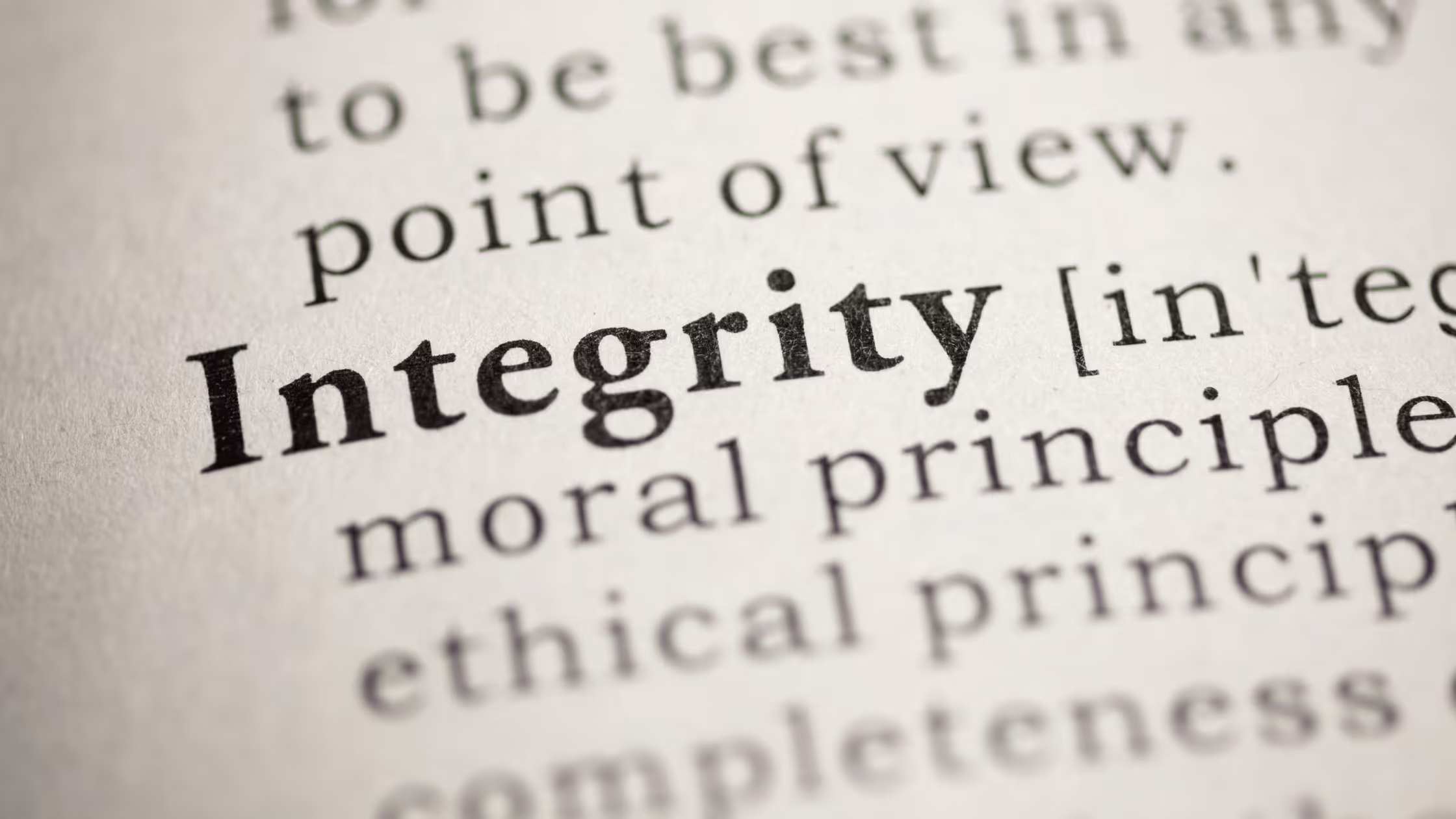
Integrity is a fundamental concept in the professional world, both for managers and employees. This content offers a comprehensive exploration of integrity: its definition, its importance at work, and its concrete applications in business. It is aimed at all professionals, managers and collaborators who want to understand how integrity influences trust, reputation and the quality of relationships within organizations. Understanding and promoting integrity is essential for building trust, ensuring business credibility, and fostering ethical and sustainable relationships.
What is integrity?
Integrity is a quality that refers to honesty and the absence of bad intentions. Here are the key points to remember:
- Integrity is a quality that refers to honesty and the absence of bad intentions.
- A person's integrity can refer to their values of absolute honesty and probity.
- Moral integrity is a virtue that attests to a person's probity, honesty, and impartiality.
- Integrity can be defined as the state of something that is in its entirety, that is not damaged or altered.
- Integrity is a concept of aesthetic, medical, ethical, legal, and political value.
- A person's integrity is often perceived as an irreproachable character and an unwillingness to be bribed.
- Integrity is a very important moral value that creates credibility.
- Integrity is an important moral value that is often associated with honesty and probity.
After answering the question “What is integrity?” , let's discover its definition and its various dimensions in more detail.
Integrity: definition and a bit of vocabulary
Definition of integrity
Integrity is a quality that refers to honesty and the absence of bad intentions. It is demonstrated by values of absolute honesty, probity and impartiality. Moral integrity is a virtue that attests to a person's probity, honesty, and impartiality. Integrity can also be defined as the state of something that is in its entirety, that is not damaged or altered. This concept applies to many fields: aesthetic, medical, ethical, legal or political. A person's integrity is often perceived as an irreproachable character and an unwillingness to be bribed. It is a very important moral value that creates credibility and is often associated with honesty and probity.
Origin and etymology
The term “integrity” comes from Latin Integritas, whose etymology refers to the idea of totality, purity and coherence.
Synonyms and dimensions of integrity:
- Probity
- Vertu
- Justice
- Loyalty
- Health
- Cohesion
- Purity
- Entire of a set
The concept of integrity had its historical beginning in the 14th century, evolving over time thanks to philosophical, medical, political and moral research, and was enriched by multiple dimensions and forms depending on the field.
Integrity and civil law
A person's integrity is protected by civil law, which states that the human body is inviolable. It is perceived as an irreproachable state and the refusal of Se allow corruption, which gives the integrated person particular importance in society.
Examples of integrity in the care professions
For example, a doctor with integrity will prescribe only the medications that are necessary for his patient, without being influenced by other interests. Jobs related to care and human responsibility are particularly dependent on this quality.
After defining integrity, let's look at why integrity is essential in business.
Why value integrity in business?
The essential factor in professional cohabitation, integrity, is rarely mentioned in job offers. However, this quality is essential to establish a work environment based on trust and respect. In the company, a certain level of integrity is expected of everyone, because it directly affects honor and name, that is, to the reputation and consideration that one takes for oneself and the organization.
Integrity concerns not only the employee, but the entire organization, from management to operational functions. It forms the basis for ethical and sustainable relationships with customers and partners. According to an EY study, 50% of respondents believe that integrity is essential to a company's reputation.
Difficulty integrating integrity and the need to embody it
However, integrity remains difficult to integrate: everyone can justify their differences and the concept itself is relative, varying from person to person. Manager or collaborator, it is therefore necessary to understand how to embody and promote it.
After understanding the importance of integrity in business, let's discover how managers can promote it on a daily basis.
Integrity for the manager: overcoming obstacles
The role of the manager is crucial in creating a climate conducive to integrity:
- Communicate expectations clearly : the team must know what the manager means by transparency and honesty.
- Encouraging expression and dialogue : establish moments of exchange on ethical practices and situations encountered.
- Set up self-assessments : allow everyone to analyze their past actions, by setting an example for themselves.
- Rewarding integrity : recognize and value ethical behaviors to strengthen motivation and commitment.
After having seen the role of the manager, let's see how each collaborator can act with integrity.
Integrity for the employee: acting consistently
For an employee, integrity is reflected in concrete behaviors:
- Compliance with rules and procedures : knowing and following company rules guides ethical decisions.
- Mutual aid and generosity : supporting colleagues when they need it.
- Exemplarity : embody corporate values to inspire peers.
- Active listening : respect the opinion of others, even when there is a disagreement.
- Recognizing your mistakes : taking responsibility reinforces honesty and credibility.
After identifying individual behaviors, let's see how to recognize integrity in the office.
Recognizing integrity in the office
Integrity is often evident in simple gestures, sometimes invisible:
- A supervisor who informs his team of the difficulties encountered by the company showshonesty and trust.
- A specialist who is faced with an obstacle asks for help from colleagues or manager, illustrating thehumility.
- Taking the initiative in non-mandatory tasks, such as emptying trash cans or tidying up a common area, testifies to the Sense of duty.
- Respecting the confidentiality of past professional information demonstrates the loyalty and integrity towards former employers.
So, as the proverb says: “Integrity breeds credibility”. It becomes a real lever for establishing relationships of trust and a sustainable professional environment.





%20(1).avif)





.avif)