AI and mental health: towards a new era of psychological prevention?
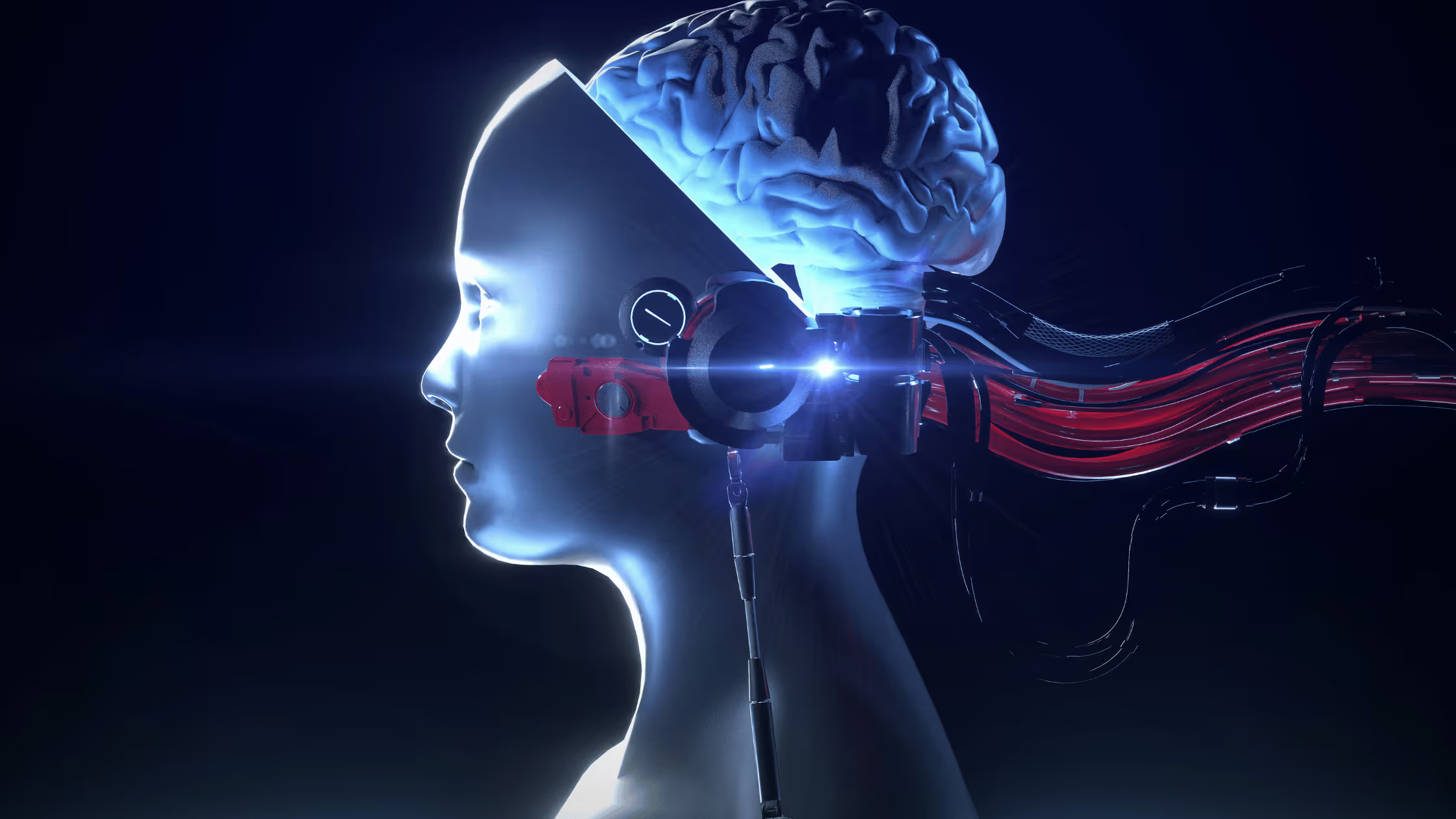
It is a fact that in 2025, AI is no longer content with optimizing our agendas or predicting trends: it is now entering our most sensitive and sometimes most private spheres. Emotional fatigue, isolation, mental overload... as many signals as some artificial intelligence tools are already capable of detecting. Through language analysis algorithms, support chatbots or prevention platforms, AI is invited where we did not imagine crossing technology: in listening, care, human relationships and even further, the sanity.
Something to shake up our bearings. Because while the idea of a robot capable of offering psychological support may be disturbing, it also responds to an urgent reality: that of millions of people in pain, without an appropriate response or immediate access to a mental health professional.
Should we then see it as a silent revolution in the service of mental well-being, or a technological mirage that replaces humans without ever equalling them? At a time when organizations are looking to better support their employees, AI raises a double promise: detect earlier, act more accurately, provided they do not forget that behind each data, there is a real person.

Artificial intelligence (AI) is transforming our business environments, promising both efficiency and innovation. However, this technological revolution comes with real challenges, especially when it comes to mental health and well-being at work.
Automation and professional insecurity: between opportunity and concern
The automation of tasks, facilitated by AI, raises concerns about job security. One ADP study Reveals that 42% of workers believe that AI could replace all or part of their functions, and 18% express professional insecurity linked to this technology.
These fears are not unfounded. At the beginning of 2024, a Resume Builder study revealed that Nearly 37% of businesses surveyed had already replaced employees with AI, and 44% planned to do so in the near future. The movement affects all sectors, from call centers to finance, marketing and even legal.
“The introduction of AI into the world of work can lead to feelings of insecurity that can affect the mental health of employees. The lack of control over their professional future, coupled with the fear of being replaced by machines, can generate stress, anxiety, and a feeling of powerlessness. All of these factors combined reduce well-being and engagement at work.“ Clelia Sacadura, Occupational psychologist and expertise director @Qualisocial
A striking example: Shopify, an e-commerce giant, recently implemented a internal rule prohibiting any new recruitment if artificial intelligence is able to perform the task in question. A policy that reflects a fundamental trend in some tech companies, aimed at prioritize automated productivity over workforce growth.
💡 To alleviate these fears, businesses can invest in continuing education, allowing employees to develop new skills and adapt to technological developments.
Increased surveillance: the impact on autonomy and stress
AI-based monitoring tools, such as productivity analysis or scoring, can be perceived as constant monitoring. A study indicates that employees monitored by AI feel less autonomous and express more stress, which can hinder their creativity and effectiveness. In France, a survey conducted by ADP Research reveals that nearly 18% of workers believe that AI will replace some or all of their current functions, and 42% think that AI could have a negative impact on their jobs. This perception of professional insecurity is particularly pronounced among those who lack sufficient knowledge about AI to form an opinion, with 18% of them showing concern.
💡 Best practice: involve employees in the implementation of these tools and ensure transparency on their use to build trust and reduce the feeling of intrusive surveillance.
Cognitive load and hyperconnection: the side effects of AI
Paradoxically, by facilitating access to information and automating certain tasks, AI can increase the cognitive load of employees. The need to adapt quickly to new tools and the pressure to be constantly connected can lead to Mental fatigue and stress.
💡 Encourage practices of disconnection, such as regular breaks and flexible work schedules, can help maintain the mental health of employees.
”The pervasiveness of technology and the pressure to always be productive and available can drain employees' mental resources, making them more vulnerable to stress and burnout.” Clelia Sacadura, Occupational psychologist and expertise director @Qualisocial
Loss of meaning: redefining the human role
Integrating AI into tasks previously performed by humans can lead to A loss of Meaning at work. Employees may experience a decrease in added value, affecting their motivation and commitment.
💡 Redefining roles by focusing on unique human skills, such as creativity, empathy, and decision-making, can enhance a sense of purpose and job satisfaction.
It is also important not to overlook the Risk of isolation that excessive use of AI can cause in the long run. In addition to a loss of meaning, it presents a real danger. By interacting more with an AI (and therefore a robot!) that with colleagues, the risk is to find yourself in a form ofsocial isolation.
This is one of the reasons why HR teams have a central role to play: they need to ensure that the integration of AI into business environments takes place in a logic of complementarity and not substitutions. This involves dTo support employees in these technological transitions, of Remain vigilant in the face of weak signs of ill-being, and to continue to promote a work culture based on human relationships, listening and meaning. In the prevention of psychosocial risks, human resources will more than ever be the guarantors of the balance between innovation and humanity.
AI as a tool for the early detection of psychological disorders
It is certain that AI is changing the way we relate to work, creating challenges for the mental health of employees, especially due to stress and information overload. However, it also offers solutions to improve mental well-being. When properly used, AI can quickly identify signs of stress or burn-out., thus facilitating early intervention.
Identifying weak signals: a silent revolution
AI algorithms are now capable of identify subtle indicators of ill-being, such as changes in the pace of work, variations in the tone of communication, or signs of digital isolation. Some businesses* are exploring the use of natural language processing algorithms to analyze internal communications and identify early signs of psychological stress among their employees.
*VTT Technical Research Centre of Finland has developed a tool that analyzes behavioral data from the use of computers to distinguish between stressful and non-stressful working conditions, thus allowing for early intervention.
Tools already in place: towards proactive prevention
As said, many businesses have already integrated AI-based tools to monitor the well-being of their employees. These systems, such as HR dashboards, well-being scores, or anonymized alerts, make it possible to quickly detect signs of distress and take action before a situation deteriorates.
Alert tools, no diagnosis!
It is essential to point out that These technologies are no substitute for mental health professionals. They do not make a diagnosis, but point to areas of fragility that require particular attention. This distinction is crucial to maintaining employee trust and ensuring ethical use of these tools.
Practical tips for a successful implementation in business
- Transparency : Clearly inform employees about the data collected, their use and the protective measures put in place to ensure their confidentiality.
- Informed consent : Ensure that employees give their free and informed consent to the use of these tools.
- Manager training : Train team leaders to interpret AI-generated alerts and respond appropriately, directing employees to the right resources.
- Integration into a global strategy : Use AI as a complement to existing workplace wellness initiatives, not as an isolated solution.
By adopting a human-centered approach and by integrating AI in an ethical and transparent way, businesses can strengthen their capacity to prevent mental disorders and promote a healthy and fulfilling work environment. However, it is essential to remember that these AI tools must always complement human support and follow-up by mental health professionals. At Qualisocial, we strongly believe that AI can be a valuable ally in the early detection of psychological risks, but It should never replace human support. The objective is to use these technologies in support, to improve the care of employees, and not to replace them with direct and expert human intervention.

Support for mental health professionals?
Although it is obvious that artificial intelligence (AI) does not and will not replace (probably!) never psychologists, it can nevertheless act as a valuable relay, both for patients and for practitioners.
On the patient side, AI can play a complementary role in several situations:
- For mild to moderate pathologies : such as the anxiety, sleep disorders or a feeling of occasional isolation, certain applications or accompanying chatbots can offer first-level emotional support.
- In the follow-up between two consultations : thanks to tools that allow you to keep a diary of your emotional state or to follow your habits, AI ensures a form of continuity, without replacing humans.
- For a first level of listening : some prefer to speak to an anonymous interface or write down their feelings before taking the plunge into a professional. AI can then facilitate entry into a care pathway.
For mental health professionals, AI also represents operational and strategic support :
- She can Help sort out emergencies by automatically analyzing certain keywords or tones in messages to identify cases that require immediate attention.
- Tools ofautomated note-taking help during consultations allow therapists to remain focused on human exchange rather than on administrative constraints.
- By detecting some Weak signals through the analysis of behavioral data (such as the evolution of the frequency or content of interactions), it can alert practitioners to changes in condition or the risk of relapse.
The aim is not to replace the therapeutic relationship, but to Strengthen it, by relieving professionals of certain repetitive or time-consuming tasks to allow them to refocus on their essential value: The quality of the human relationship.
The benefits of AI in the service of mental health
- Immediate availability, 24/7: Tools like therapeutic chatbots offer constant assistance, which can be particularly useful for people with access constraints to care.
- Dramatization of the first approach: The use of these tools can facilitate the first step towards treatment, by reducing the psychological barrier associated with consulting a professional.
- Diagnostic support through semantic or behavioral analysis: Studies show that AI can analyze behavioral data to accurately predict the risks of depressive relapses or suicide attacks.
→ At Qualisocial, our customers who benefit from a crisis line also have access to 24/7 care, with mental health professionals ready to intervene directly, guaranteeing human support at all times.
The limits and dangers of AI on mental health
- Risk of misinterpretation: If a person relies solely on the tool without human consultation, this can lead to misinterpretation.
- Lack of real empathy: While chatbots can simulate empathetic conversation, they can't replace authentic human interaction.
- Delay in human care: Excessive dependence on these tools can delay access to appropriate professional care.
Key tips for the virtuous use of AI in mental health
- Integration into a care pathway: Use AI as a complement to human consultations, not as a substitute.
- Training of professionals: Train mental health professionals in the use of these tools so that they can effectively integrate them into their practice.
- Ongoing evaluation: Establish regular evaluation mechanisms to ensure the effectiveness and safety of these tools.
- User awareness: Inform users about the capabilities and limitations of these tools to avoid excessive dependence.
Quality of psychological support: a promise under certain conditions
AI makes it possible to monitor the evolution of the emotional state of individuals in real time, thus facilitating more responsive and appropriate care. Some applications use algorithms to offer personalized exercises based on user responses, contributing to better mood and stress management.
Despite these benefits, it is essential to Remain vigilant as for the standardization of responses generated by AI. As current language models may lack nuances in their interactions, which may limit their effectiveness in complex or sensitive situations.
Using AI to make up for the lack of mental health resources could, in the long run, reduce the involvement of human professionals, if it is perceived as a replacement rather than a complement. Guillaume Dumas, psychiatrist and professor at the University of Montreal, nevertheless points out that AI should allow doctors to be even more human with their patients, relieving them of certain tasks to focus on the essentials of the therapeutic relationship.
Reliability and ethics: essential safeguards
The integration of artificial intelligence (AI) in the field of mental health offers promising opportunities. However, in order to ensure beneficial use that respects individual rights, it is crucial to establish solid ethical and regulatory safeguards.
Validation by health professionals
AI-generated recommendations need to be validated by qualified mental health professionals. This human validation is essential for interpreting the nuances of individual situations and avoiding potential algorithm errors. A study highlights that current language models may lack nuances in their interactions, which can limit their effectiveness in complex or sensitive situations.
Limiting AI to support functions, not diagnostic functions
It is important to restrict the use of AI to support functions, such as the early detection of weak signals or support between consultations, without replacing the diagnosis made by a professional. The European Union Artificial Intelligence Regulation categorizes AI systems according to their level of risk and imposes restrictions on high-risk systems, especially those used in healthcare.
Transparency on the algorithms used
Algorithmic transparency is essential for building trust. Users need to be informed about how decisions are made and what data is used by AI. The Canada Protocol offers an ethical checklist for the use of AI in suicide prevention and mental health, stressing the importance of transparency and human supervision.
Essential ethical conditions
- Informed consent and the option to opt out: Users must give their free and informed consent for the use of their data, with the option to withdraw at any time.
- Confidentiality of sensitive data: The protection of personal data is essential. Studies have highlighted the risks of using neural data, underlining the need for strict regulations to prevent misuse.
- Systematic human supervision: AI should be used under the constant supervision of healthcare professionals to ensure appropriate interpretation of results and recommendations.

Artificial intelligence, applied to mental health, can be a lever for progress. Not a magic wand. Not a substitute for humans. It is in the balance (sometimes subtle) between technology and relationships that its true value is at stake. When it is well thought out, well supervised, well used, AI can free up time, detect earlier, make paths more fluid... while leaving professionals with the core of their job: meeting, listening, caring. It is also crucial to ensure that the use of AI in work environments does not increase the mental load and stress levels of teams. AI should remain a support, not an additional source of pressure.
So that the promise of artificial intelligence in support of mental health (and not the other way around!) To become a reality, we need a compass: ethical, collective, and clear. That presupposes a close collaboration between businesses, healthcare professionals and solution developers.
It is exactly in this logic that fits Qualicare IA, the smart part of the Qualicare application. This is exactly the logic behind Qualicare IA, the intelligent component of the Qualisocial application. Its objective: to bring more efficiency to preventive approaches, without ever losing sight of the human factor.
What Qualicare IA allows in concrete terms:
- Analysis of responses free from internal barometers or RPS audits,
- Transcript and automatic synthesis sensitive investigations (harassment, conflicts, etc.),
- Structuring notes (HR, interviews...),
- Maintenance report as part of harassment investigations,
- Integrated chatbots (website & Qualicare) to facilitate the listening and collection of reports,





%20(1).avif)





.avif)